

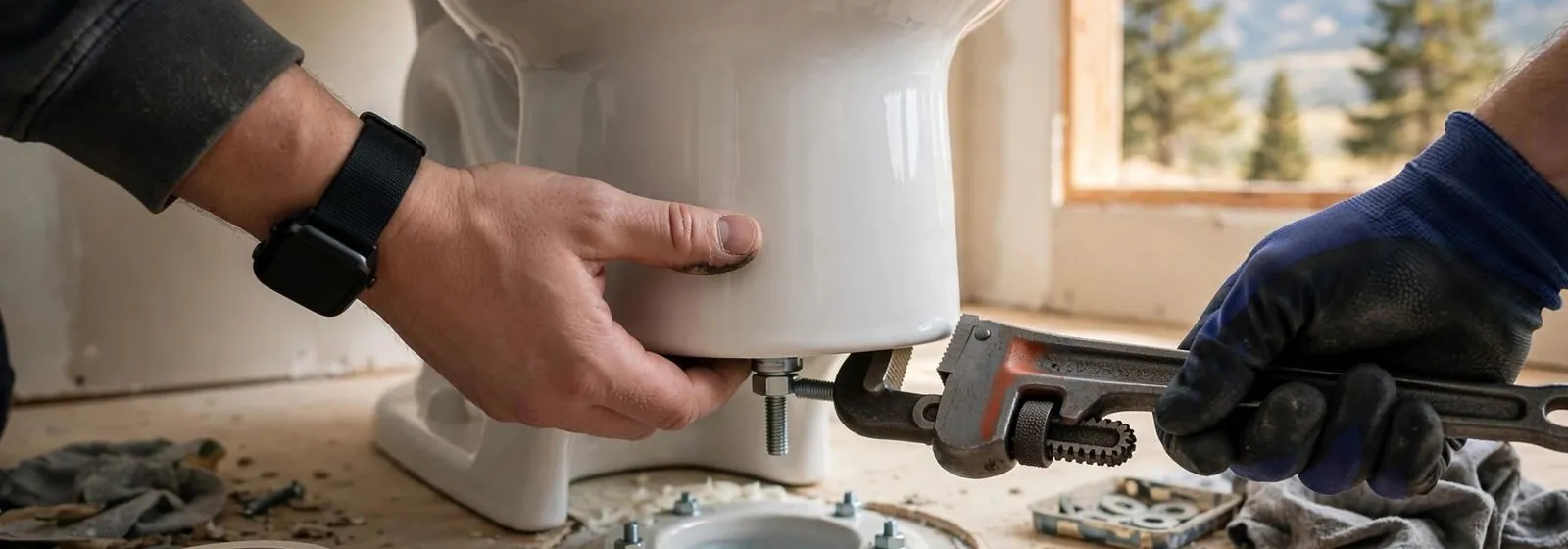
Toilet repair in Westfield, NJ covers any fix to the bowl, tank, fill valve, flapper, supply line, wax ring or flange that keeps a toilet flushing and sealed to the floor. When water is on the bathroom floor, the clock is running on the subfloor and the ceiling below, so we answer calls around the clock on our 24/7 dispatch line.
While you wait, turn the oval handle on the small valve behind the toilet clockwise until it stops. If the bowl is about to spill, take off the tank lid and push the rubber flapper down to stop more water entering the bowl. Same-day appointments are available when the schedule allows, and you can call the dispatch line to tell us what the water is doing.
Toilet Symptoms Decoded: Likely Cause and Usual Fix
Most toilet calls begin with a symptom, not a part name. Match what you see to the likely cause, and you will know whether you can try something or should stop and call.
| What you see or hear | Likely cause | Usual fix |
|---|---|---|
| Water trickles into the bowl after flushing | Worn flapper or a chain that is too tight | Replace the flapper, reset the chain slack |
| Hissing or refill that never stops | Failed fill valve or float set too high | Replace the fill valve, adjust float height |
| Water seeps from the floor edge | Failed wax ring or loose closet bolts | Pull the toilet, replace the wax ring, reset the toilet |
| Bowl rises after a flush and drains slowly | Clog in the trap or the drain beyond it | Plunge once, then call if it repeats |
| Tank sweats and drips on the floor | Condensation on the cold tank, or a leaking tank bolt | Check the bolts and gaskets, consider a tank liner or new tank |
| Toilet rocks on the floor | Loose bolts or a damaged flange | Reset the toilet and repair or replace the flange |
| Leak under the tank at the supply connection | Worn washer or cracked supply line | Replace the supply line and the coupling nut seat |
A repeat symptom after a fix points to a second problem, often in the drain or the flange.
Overflowing Right Now: What to Do Before We Arrive
These four steps limit the damage on an overflowing or leaking toilet, and none of them needs tools.
Stop the refill
Close the supply valve behind the toilet by turning it clockwise. In older bathrooms the valve may be stiff, so use both hands and do not force a handle that is starting to break.
Hold the flapper down
Lift the tank lid and press the rubber flapper into its seat. That blocks tank water from reaching the bowl while you work on the valve.
Contain the water
Lay towels along the base and across the doorway. If water is dripping through a ceiling below, put a bucket under it and move anything valuable out of the way.
Leave the plunger and chemicals alone
Repeated plunging on a full line pushes water onto the floor. Drain cleaner sitting in a standing bowl can splash and burn, and it makes our job riskier.
Bowl still rising?
Lift the tank lid, push the flapper down and close the shutoff valve. Then call.
Why a Running Toilet Wastes Water and How the Parts Fit
A flush opens the flapper, which drops tank water into the bowl. As the tank empties, the fill valve opens, refills the tank and the bowl trap, and shuts off when the float rises. A flapper that no longer seals leaks tank water into the bowl all day, and the fill valve opens now and then to replace it. That is the phantom flush you hear in a quiet house.
Put a few drops of food coloring in the tank and wait without flushing. If color appears in the bowl, the flapper or flush valve seat is leaking. If the water rises to the top of the overflow tube instead, the fill valve or float is the problem. Either part is cheap compared with the water a constantly running toilet can use, but a flush valve with a pitted seat may be worth replacing as a unit.
Older Westfield Bathrooms and Stiff Shutoff Valves
Census-based housing data for ZIP 07090 shows about 37% of homes built in 1939 or earlier, and a median build year near 1953. In bathrooms that old, the shutoff valve behind the toilet may be decades past its last use, with a packing nut that leaks when turned or a stem that will not seat. If your valve drips as soon as you move it or will not close, stop turning it and close the main instead.
Older toilets can also be one-piece tanks with unusual bolt patterns or floor flanges that have rusted or cracked. We check the flange and the floor before we recommend a like-for-like swap. Bathrooms in a district listed in the town's preservation plan may have original fixtures you want to keep, so tell us at the start.
Source type: Census housing data summary and municipal preservation plan summary
Fixing a Leaking Base: The Wax Ring Sequence
A toilet that leaks at the floor is nearly always a sealing problem at the drain connection. The sequence is the same every time.
- 1
Shut off, flush and sponge the tank dry
Close the supply valve, flush once, then remove the remaining water from the tank and bowl so the toilet is light enough to lift.
- 2
Disconnect and lift the toilet
Take off the supply line and the closet bolt caps. Rock the toilet free and set it on a towel, since the old wax is sticky.
- 3
Inspect the flange and subfloor
We look for cracks, broken ears and a flange sitting below the finished floor. Soft or stained subfloor means the leak has been running a while.
- 4
Repair the flange if needed
A cracked flange can be repaired with a repair ring or replaced. A wax ring on a damaged flange will fail again.
- 5
Set a new wax ring and the toilet
The toilet is lowered straight onto the flange, bolted evenly and checked for rocking. Over-tightening one side cracks the porcelain.
- 6
Flush test and watch the base
We run several flushes, check the supply connection and look at the base and ceiling below before leaving.
Clogged Toilet: What a Homeowner Can Safely Try
A clog in the bowl trap is common, and a plunger is the right first tool. Know where to stop.
One good plunger series
Use a flange plunger with a tight seal and push slowly before pulling. A few pumps of steady pressure beat fast jabs.
Do not flush again
If the first flush did not clear, another one adds water to a bowl that cannot drain.
Toilet auger for a close clog
A closet auger reaches the trap bend with a rubber guard to protect the porcelain. It clears paper and many soft clogs.
When to stop
If other fixtures gurgle, a floor drain bubbles or the clog returns in days, the blockage may be in the main line. See our drain cleaning service for line-clearing details.
Items that do not belong
Wipes, cotton swabs, dental floss and toys stop in the trap. They need to be pulled, not flushed through.
Repair the Toilet or Replace It
Repair when
- The fault is a flapper, fill valve, supply line or wax ring
- The porcelain is unchipped with no hairline crack at the base
- The toilet flushes well and you like its height and shape
- The bathroom is original and the fixture is worth keeping
Replace when
- The bowl or tank has a crack that weeps
- Flushes are weak even with new parts
- Repeated clogs trace back to the toilet's trap design
- You want a taller seat, a better water-use rating or a different layout
Installing a New Toilet: The Order of Work
A new toilet is a straightforward job when the old one comes out cleanly. The order below prevents most callbacks.
- 1
Confirm the rough-in
We measure from the finished wall to the flange center. Most toilets fit a standard rough-in, but a tight or odd measure rules some models out.
- 2
Remove the old toilet and clean the flange
Old wax and bolts come off the flange so the new ring seats flat.
- 3
Replace the supply line and valve if needed
A new toilet is the best time to swap an old braided line or a worn shutoff valve.
- 4
Set, bolt and level
The toilet goes straight down on the ring and is bolted evenly, then shimmed if the floor is uneven.
- 5
Connect water and test
We set the float height, check for leaks and run repeated flushes with the cover off.
What Decides the Cost of a Toilet Repair or Installation
Cost swings widely depending on whether the fix is a ten-minute part swap or a rebuilt flange. You get a clear price before work starts. These are the main factors.
- Which part failedA flapper or fill valve is a different job from a wax ring and flange repair, and a cracked tank means a new fixture.
- Condition of the shutoff valveA valve that will not close adds time and parts. We may need to replace it or close the main to work safely.
- Flange and subfloor damageA rotted subfloor or broken flange adds carpentry and materials before the toilet can go back.
- The toilet itselfSize, flush mechanism, seat height and whether you supply the fixture all change the total.
- Hour of the callNight and weekend response can cost more than a daytime booking for the same repair.
Homeowners policies often cover sudden accidental discharge, such as a supply line that bursts, but not wear, corrosion or slow seepage under a base, so read your policy. Photograph the damage before drying. Call (908) 357-1542 and we will explain what we found and what the options are.
Code, Permits and Neighboring Towns
New Jersey's plumbing subcode adopts the 2021 National Standard Plumbing Code, and toilet work follows it. Permit rules vary by job, so ask the Westfield construction office before work starts if you are moving a toilet or changing drain lines. A like-for-like swap is a different conversation from relocating a fixture, and the office can tell you which side your job falls on.
We serve Westfield and nearby towns, including the township of Scotch Plains next door. If you are planning a bathroom change, our plumbing installation service covers sequencing with other trades.
Toilet Questions Westfield Homeowners Ask
Yes. Our dispatch line is staffed 24/7, and an overflowing toilet or a leak through a ceiling is something we take overnight. Call, tell us what the water is doing and whether you can close the valve.
Same-day appointments are available when the schedule allows for repairs that can wait.
Yes. The tank is leaking into the bowl, usually through a worn flapper. It wastes water, raises your bill and can wear out the fill valve earlier.
Look for water at the base after flushing, a toilet that rocks, a sewer smell or stained flooring around it. A tank leak can look similar, so we check the source before pulling the toilet.
Do not force it. Close the main shutoff for the house and call us, because a valve that breaks off in your hand turns a small fix into a flood.
It is when water is rising or other fixtures back up. If the bowl simply drains slowly and you have another toilet, you can plunge once and book a visit.
Usually yes. We check the rough-in distance and the flange first. Bring the model number to the call so we can confirm it fits.