

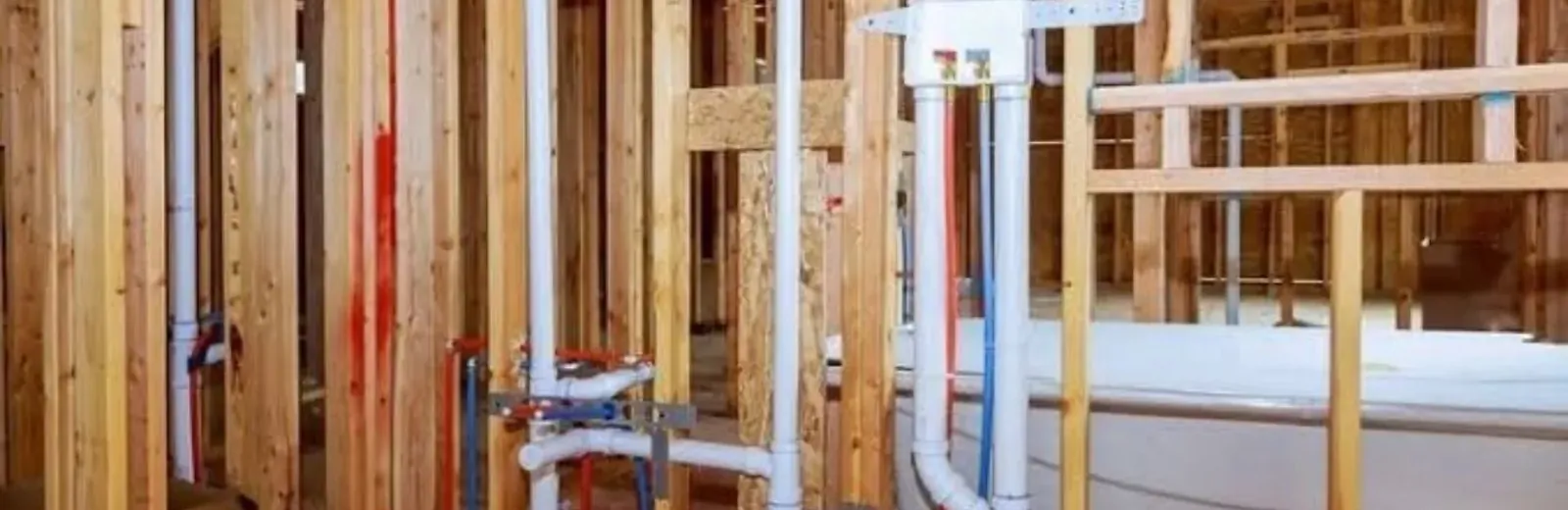
A plumbing system installation in Westfield, NJ is the work of laying out and connecting three separate networks: supply pipes that bring in water, drain-waste pipes that carry it out by gravity, and vent pipes that let air in so the drains flow. It applies to a new addition, a gut remodel, a finished basement bathroom, or a full rebuild after damage.
This guide explains how to define the scope, what the rough-in stage means, how inspections usually sequence, and how pipe materials compare. It also marks where a homeowner plans and decides, and where a licensed plumber has to do the work.
Start With a Written Scope
List every fixture, appliance and hose connection that will be added, moved or removed. Include the washing machine, a utility sink, an outdoor spigot, a water heater location and a floor drain. Plumbers price and plan by fixture count and by how far each one sits from the main stack and the water service.
Then note what the walls and floors are. A fixture added directly above or beside an existing stack is a short run, and one on the far side of the house, or in a slab, is a long one. Bring photos of the basement ceiling and the existing main shutoff to every site visit.
The Build Order From Rough-In to Final
Plumbing happens in two visible stages, with an inspection stage between them.
- 1
Layout and ordering
Fixture locations are marked on the framing. Drain slopes, vent paths and the route of supply lines are worked out against joists and studs.
- 2
Rough-in
Drain, waste, vent and supply pipes are installed inside the open walls and floors, along with stub-outs where fixtures will connect. Nothing is covered yet.
- 3
Pressure and leak testing
Supply lines are pressurized and drains are filled or air-tested so leaks appear while the walls are still open.
- 4
Rough inspection
The municipal plumbing inspector looks at the exposed work. Ask the construction office which inspections apply to your job.
- 5
Close up and finish
Walls are covered, then fixtures, faucets, the water heater and appliances are connected and tested under normal use.
- 6
Final inspection
Once the finished work is complete, the inspector signs off. Keep the paperwork with your house records.
Planning a remodel?
Decide fixture locations before walls open. Moving a drain later costs far more than moving it on paper.
Pipe Materials Compared
| Material | Common use | Strengths | Trade-offs |
|---|---|---|---|
| Copper | Supply lines | Long track record, handles heat, rigid | Soldered joints need skilled labor, material is costly |
| PEX | Supply lines | Flexible, fewer joints, goes around obstacles | Not for exposed sunlight, must meet local approval |
| PVC and ABS | Drain and vent | Light, quick to join, resists corrosion | Louder than iron, some uses limited near high heat |
| Cast iron | Drain and stack | Quiet and durable | Heavy, harder to cut and work in tight spaces |
| Galvanized steel | Old supply lines | Still found in older houses | Rusts from inside, narrows over time, usually replaced |
Which material is allowed for a given use is decided by New Jersey's plumbing subcode and the local inspector, not by preference alone.
Venting Is the Part Homeowners Overlook
Every fixture drain needs air behind it. Without a vent, flowing water pulls a vacuum, siphons the trap seal, and lets sewer gas into the room. That is why a basement bathroom needs more than a drain stub: the vent must connect to a stack or run to the roof in a code-compliant way.
Ask your plumber to show you the vent plan on the quote or a sketch. A shortcut vent that works at first can gurgle and slow later, and fixing it means opening finished walls. For existing systems, our plumbing installation work starts by tracing where the stacks and vents already run.
Standards, Licensing and Permits in Westfield
New Jersey's plumbing subcode (N.J.A.C. 5:23-3.15) adopts the 2021 edition of the National Standard Plumbing Code Illustrated. Your plumber should be able to explain how the layout and materials on your plan meet that standard. Ask for that explanation before work begins.
Under the Division of Consumer Affairs, plumbing work may only be performed by a master plumber, an authorized plumbing contractor, or their employees. Ask for the license number and confirm it with the State Board of Examiners of Master Plumbers. Ask the Westfield construction office which permits and inspections your project needs, because rules vary by job.
New Jersey requires you to call 811 before any digging, so a new water service, sewer lateral or outdoor line starts with that call and not with a shovel.
Source type: state administrative code and licensing FAQ
What You Decide and What the Plumber Does
Homeowner decisions
- Fixture list and locations
- Budget limits and finish level
- Which permits and inspections the town requires, by asking
- Access, scheduling and who is home during water shutoffs
Licensed plumber work
- Sizing and routing supply, drain and vent lines
- Cutting into existing stacks and the water service
- Pressure testing and arranging inspections
- Connecting fixtures, water heaters and gas appliances
When to Call a Pro, and Where to Go Next
Planning, measuring and choosing fixtures are fine for homeowners. Anything that cuts into the stack, adds drains, or touches the water service or gas line must go to a licensed plumber. Call our dispatch line to talk through scope before you buy fixtures.
If the old supply piping is failing, repiping can be planned with the remodel so walls open once. A new water heater location should be settled early too, and our water heater installation team coordinates with the rest of the rough-in. We also serve Scotch Plains, as described on the Scotch Plains page.
System Installation Questions
It depends on the number of fixtures, the framing and access. A single bathroom takes much less time than a whole-house rebuild, and the plumber should give a schedule after seeing the site.
Permit rules vary by job, so ask the Westfield construction office before any work starts. Do not rely on a general answer from the internet.
New Jersey allows plumbing work only by a master plumber, an authorized plumbing contractor, or their employees. You can plan, choose fixtures and prepare the space, but licensed hands do the plumbing.
Any digging, such as a new water service or a drain line in the yard, can hit buried utilities. New Jersey requires calling 811 before digging.
Both work. PEX is easier to route through finished framing and copper is rigid and long established. Your plumber will pick based on the layout and local requirements.
Often yes, since older stacks may be iron and old supply pipes may be galvanized. A camera look and a pipe check before design tells you whether the existing lines can carry the added load.