

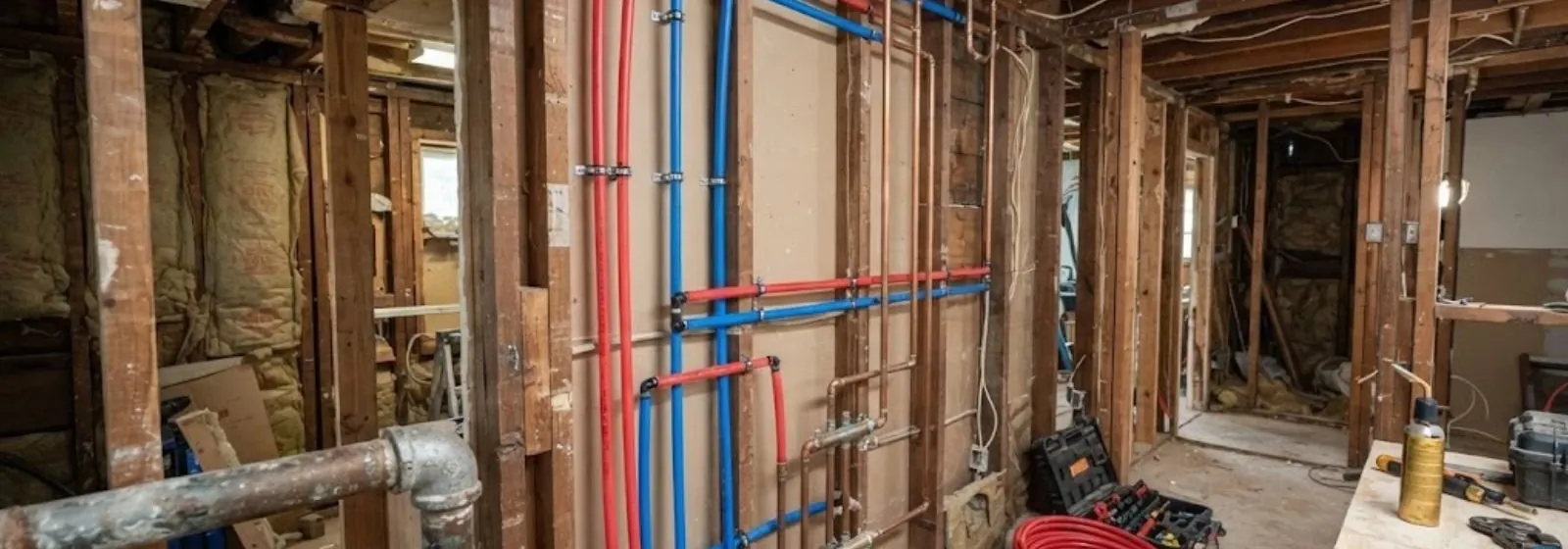
Repiping in Westfield, NJ means replacing the supply lines that carry water through a house, in one run or in stages, with new copper or PEX. It is a big decision, and it is usually a good one only after repairs start to chase each other. If you are looking at your third pinhole in two years, or the water runs brown when you open a tap after a quiet night, repiping is worth pricing.
This page is for the calm version of that decision. It explains when repairs still make sense, what each pipe material offers, what a plaster house forces on the schedule, and how phased work compares with doing the whole building at once. If water is spraying today, our burst pipe repair page is the faster route, and the dispatch line is open 24/7.
Repair the Pipe or Replace the Run
A repair still makes sense when
- One fitting or one short section failed, and the pipe on both sides is sound
- A freeze split a single pipe in an otherwise healthy run
- The leak came from a valve, a hose, or a fixture connection, not the pipe wall
- You plan to sell or renovate soon and only the damaged stretch matters
- Pressure and water color are normal everywhere else
Repiping starts to win when
- Pinholes keep appearing on the same run or in different rooms
- Galvanized pipe has narrowed inside, so pressure drops when two fixtures run
- Water runs rust-colored or metallic-tasting at the tap and clears slowly
- Repairs keep exposing pipe that crumbles or flakes when cut
- A remodel already opens the walls, so the incremental cost of access is low
Signs Your Supply Lines Are Wearing Out
No single sign decides it. Two or three together make a pattern worth acting on.
Brown or orange water
Rust from galvanized steel shows up after the water sits overnight. It is worst at the tap farthest from the main.
Pressure that falls when a second tap opens
Mineral and rust buildup narrows the inside of old steel pipe, so flow drops even when the street pressure is fine.
Green stains or pinhole sprays
Blue-green crust at copper joints and tiny sprays through the pipe wall point to thinning metal.
Repeated leak calls
A second and third repair within a short span on the same line is the clearest sign of all. Our leak detection tests can show whether the failures are isolated or spread.
Mixed materials with failing joints
Old houses collect patches over the decades. A run with three different metals and several transition fittings is a candidate for one clean replacement.
Thinking about new pipes?
Describe the leaks and the pipe material you can see, and we will tell you what to check first.
Galvanized, Copper, or PEX: Trade-offs
Each material can serve a house for decades. The choice depends on what is in the walls now and what you can afford to open.
| Material | Strengths | Drawbacks | Best fit |
|---|---|---|---|
| Galvanized steel | Strong and rigid, what many older houses were built with | Corrodes from the inside, restricts flow, hard to repair in place | Rarely chosen for new work, mostly seen as the pipe being removed |
| Copper | Long track record, handles heat, unaffected by sunlight | Needs soldered or pressed joints, can pinhole under bad conditions, more labor in walls | Exposed basement runs and homes where a traditional metal pipe is preferred |
| PEX | Flexible, fewer joints, can be fished through walls with smaller openings | Cannot sit in sunlight, fittings need a clean install, some owners dislike plastic | Plaster houses where reducing wall damage matters most |
| Mixed (copper main, PEX branches) | Combines a durable trunk with easy-to-route branches | Needs careful transition fittings | Whole-house jobs with a mix of open and closed access |
Pipe choice affects labor and patching more than it affects the price of the pipe itself.
What Plaster Walls Mean for the Schedule
Many houses from the early decades of the last century have plaster over wood lath, not drywall. Plaster does not cut cleanly the way drywall does, so each access hole costs more patching. Plumbers plan routes to avoid walls where possible, running new lines through the basement ceiling, closet backs, and chases that already exist.
Expect small openings at fixtures, between floors, and at the top of vertical runs. PEX can be pulled through with far fewer holes than rigid pipe, which is why it is common in finished houses. A plasterer or painter completes the repair, and that trade is separate from the plumbing.
Older houses can also hold materials that need testing before they are disturbed, such as old paint or insulation. We flag that before opening anything, and you decide how to handle it.
Westfield's Older Housing and the Local Rules That Apply
About 37 percent of homes in ZIP 07090 were built in 1939 or earlier, and the town's historic preservation plan identifies districts such as Stoneleigh Park, Wychwood, Boulevard, and Westfield Gardens, with housing from the 1880s through the 1940s. That does not tell us what runs through your walls, because pipe gets replaced piecemeal over the years. It does mean the first step is always a look at your actual pipe, not an assumption.
New Jersey law allows plumbing work only by a master plumber, an authorized plumbing contractor, or their employees. Ask any plumber for the license number and confirm it with the State Board of Examiners of Master Plumbers. New Jersey's plumbing subcode adopts the 2021 National Standard Plumbing Code, and permit rules vary by job, so ask the Westfield construction office before work starts.
Source type: Census housing data, town preservation plan summary, and state licensing guidance
Whole House at Once or In Phases
Whole house in one project
- One set of walls opened and patched, with one cleanup
- Water off for part of each day for several days
- Best when floors, plaster, or kitchens are being redone anyway
- Every riser and branch is replaced, so no old pipe is left to fail
- Higher single outlay, lower repeated disruption
Phased by section
- Start with the worst run, often the basement trunk or a bathroom stack
- Spreads the cost over more than one season
- Water stays on for most of the house most of the time
- Leaves old pipe in place, so a failing section can show up later
- Patch work happens several times in separate areas
How a Repiping Job Unfolds
The order below keeps the water off for the shortest time and the walls closed for as long as possible.
- 1
Walk the house and map the lines
We trace where the water enters, where each riser goes, and where branches reach fixtures. We note the pipe materials, the shutoffs, and any hidden access like a closet or chase.
- 2
Test what you already have
A pressure and flow check at the farthest fixtures shows whether the problem is narrowed pipe or a supply issue. A leak trace on suspect runs shows whether the damage is spread out.
- 3
Choose the route and material
We lay out a route that limits wall openings, pick copper, PEX, or a mix, and agree on the order of rooms. You see the plan and the patching list before work begins.
- 4
Check permit rules
Permit needs depend on scope, so ask the Westfield construction office before work starts. We can describe the job in plain terms to make that call easier.
- 5
Install in stages
New lines go in, the system is shut down only while each section is connected, and temporary water is restored at the end of each day when possible.
- 6
Pressure test, flush, and hand over
We test under pressure, flush debris from each branch, and check every fixture for flow and hot water. Then we point out the access holes that a plasterer or painter needs to close.
What Decides the Price of a Repiping Job
Repiping is priced by the house, not from a table. We walk the system first, then give you the figure, and a phone call is enough to book that walk-through.
- Size and layoutMore floors, bathrooms, and branches mean more pipe, more connections, and more time.
- Pipe materialCopper takes more labor to join and run. PEX goes faster and often needs fewer openings.
- Wall type and accessPlaster, tile, and finished ceilings cost more to open and repair than open framing or basements.
- Phased or whole-housePhasing spreads the cost but adds return visits. One project is usually less disruptive overall.
- Related workReplacing shutoffs, pressure regulators, or old fixtures at the same time is easier while walls are open.
Worn pipe is generally the owner's cost, since policies often exclude wear, corrosion, and slow seepage. If a sudden burst caused damage and you are filing a claim, read the policy first. Questions about where to start? Call (908) 357-1542 and describe what you see.
Repiping Questions Homeowners Ask
Galvanized pipe is gray, threaded at the joints, and attracts a magnet. Copper is brown or green and does not. Plastic pipe is cream, red, or blue. Check the basement ceiling near the meter, and send us a photo description if you are unsure.
Usually yes. Water is off for part of each work day and restored in the evening when possible. Plan for dust near the work areas, and tell us if anyone in the house has breathing problems.
It depends on the size of the house, the pipe, and the wall type, so we do not give a single figure. A phased job is spread over separate visits, and a whole-house job runs for several days. We give a schedule once we see the system.
Sometimes. If the cause is narrowed galvanized pipe, new pipe usually restores flow. If the cause is a failing pressure regulator or a partly closed valve, we find that first and avoid replacing pipe that is fine.
Then we fix the leak. Our leak tracing confirms where the water is escaping, and a repair may be all you need. Repiping is for patterns, not single failures.
Not by itself, and we schedule it. If a pipe bursts in the meantime, the 24/7 dispatch line handles it right away. We also serve nearby towns, including Scotch Plains.