

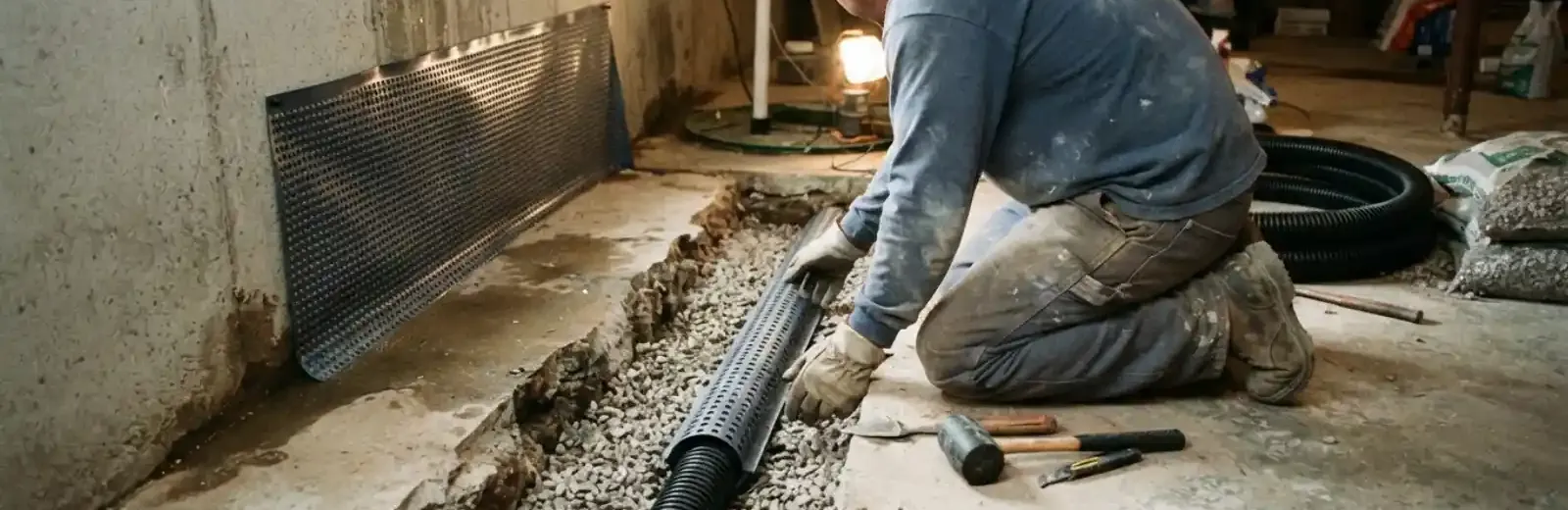
Waterproof flooring for Westfield, NJ basements means choosing a floor that tolerates moisture, such as porcelain tile, sealed or coated concrete, rigid-core vinyl plank or interlocking raised tiles, and pairing it with a dry basement. No floor makes a basement dry. A waterproof floor only survives getting wet, while the real defense is keeping water out through drainage, a working sump pump and managed grading.
That is why this guide starts with moisture control, then compares floor types, then explains what flooding does to finished basements and how Westfield storms should shape your choice.
Fix the Water Path Before You Pick a Floor
Moisture reaches a basement floor in three ways: groundwater pushing up through the slab, water entering at the wall and floor joint, and vapor passing slowly through concrete. Gutters that dump at the foundation, soil that slopes toward the house, and a sump pit that is undersized or failed are the common causes behind the first two.
A simple test is to tape a square of clear plastic to the bare slab for a couple of days. Moisture under the plastic means vapor is coming through, and drops on top mean room humidity. If you find standing water or a damp seam, our basement waterproofing and sump pump installation and repair services address the source first.
Flooring Options Compared for a Basement
| Floor type | Moisture behavior | After a flood | Watch out for |
|---|---|---|---|
| Porcelain or ceramic tile | Not harmed by water | Hose down, dry, keep going | Cold, hard, grout needs sealing |
| Sealed or epoxy-coated concrete | Resists seepage and stains | Wipe or squeegee clean | Coating peels if the slab is damp when applied |
| Rigid-core vinyl plank | Waterproof planks | Planks can lift and dry, but water can sit underneath | Trapped water under the floor can grow mold |
| Interlocking raised tiles | Air gap under the surface | Lift tiles, drain, rinse, re-lay | Lower ceiling height, hollow feel |
| Rubber or foam tiles | Resist water, soft underfoot | Remove and dry, may reuse | Weight and heat marks, some odor at first |
| Laminate, hardwood, carpet with pad | Absorb water, swell, trap moisture | Usually a tear-out | Poor choice below grade |
Choose a floor you can lift, drain or hose clean. Glue-down finishes in a basement that floods are the hardest to recover.
Water already on the floor?
Stay out if outlets or the panel may be wet, and call for pumping help before you plan any flooring.
What a Flood Does to a Finished Basement
Wicks into drywall and trim
Wet drywall absorbs water upward, so the damage reaches higher than the visible waterline.
Soaks insulation and padding
Carpet pad and fiberglass hold water for days and become a mold source.
Ruins electrical items near the floor
Outlets, appliances and the panel can be unsafe after contact with water. Stay out until a licensed electrician says it is safe.
Sewer backflow adds contamination
If floodwater came from a drain, treat everything it touched as contaminated and call for cleanup guidance.
Mold begins within days
Fast drying and removal of wet materials matter more than any surface sealer.
Westfield Storms and What They Mean for Your Floor Choice
Tropical Storm Ida in September 2021 brought catastrophic flooding to Westfield, according to a recap of a town council meeting. The practical lesson is to assume a basement here can take on water, so pick tile, sealed concrete or removable tiles rather than a glued floor you cannot recover.
A July 2025 storm dropped more than six inches on the Westfield area by 8 p.m., with flooding starting around 5 p.m. and the South Avenue traffic circle impassable by 6 p.m., per The Leader. A rate that high can outrun a single sump pump, so ask about a backup pump or battery system before you finish the room.
In August 2022 the council described clearing streams near the North Euclid and Fairview tributaries by Mindowaskin Park, buying a sewer camera for Public Works, and continuing talks on Robinsons Branch with the Army Corps and the state. Town work like that cannot be counted on for your lot, so check your own gutters, grading and drains each season.
Source type: newspaper coverage of storms and town council
Putting a Floor Over a Slab: A Sensible Order
- 1
Dry the slab and find the source
Run a dehumidifier and watch the slab for new damp spots after rain.
- 2
Fix drainage, sump and gutters
Extend downspouts, check the sump float and discharge, and add a backup if the basement has flooded.
- 3
Treat cracks and the wall-floor joint
A damp joint should be sealed or drained by a professional before finishing.
- 4
Choose a removable or drainable floor
Tile, coated concrete or raised tiles fit this best. Avoid gluing a floor you cannot lift.
- 5
Keep valuables off the floor
Store items on shelves and raise the water heater, furnace and washer on stands if they sit low.
When to Call a Pro
Picking and installing a floor is a remodel decision. Standing water, a sump pump that cycles constantly or fails, and drains that back up are plumbing problems, and in New Jersey only a master plumber, an authorized plumbing contractor, or their employees may perform them. Call our 24/7 dispatch line if the pit is full or the pump has stopped during rain.
We also serve Scotch Plains, where Ida put water on many streets, as described on the Scotch Plains page. The same moisture rules apply there.
Basement Flooring Questions
The planks themselves are. Water that gets underneath can stay there, so it only protects if the basement is dry or the floor can be lifted and dried.
It is a poor fit. Hardwood absorbs moisture and swells below grade, and a single flood can ruin it.
Only if the slab is dry. Coatings applied over damp concrete peel. Test with the plastic sheet method, and fix the water source first.
If your basement has taken water or your pit is near its limit, a backup or battery system is worth discussing. A plumber can size it to your pit.
Policies differ, and many exclude surface flooding and sewer backup unless extra coverage was added. Read your policy and ask your agent.
It is easier to recover after a flood because the tiles lift and the air gap lets the slab dry, but you lose some ceiling height.