

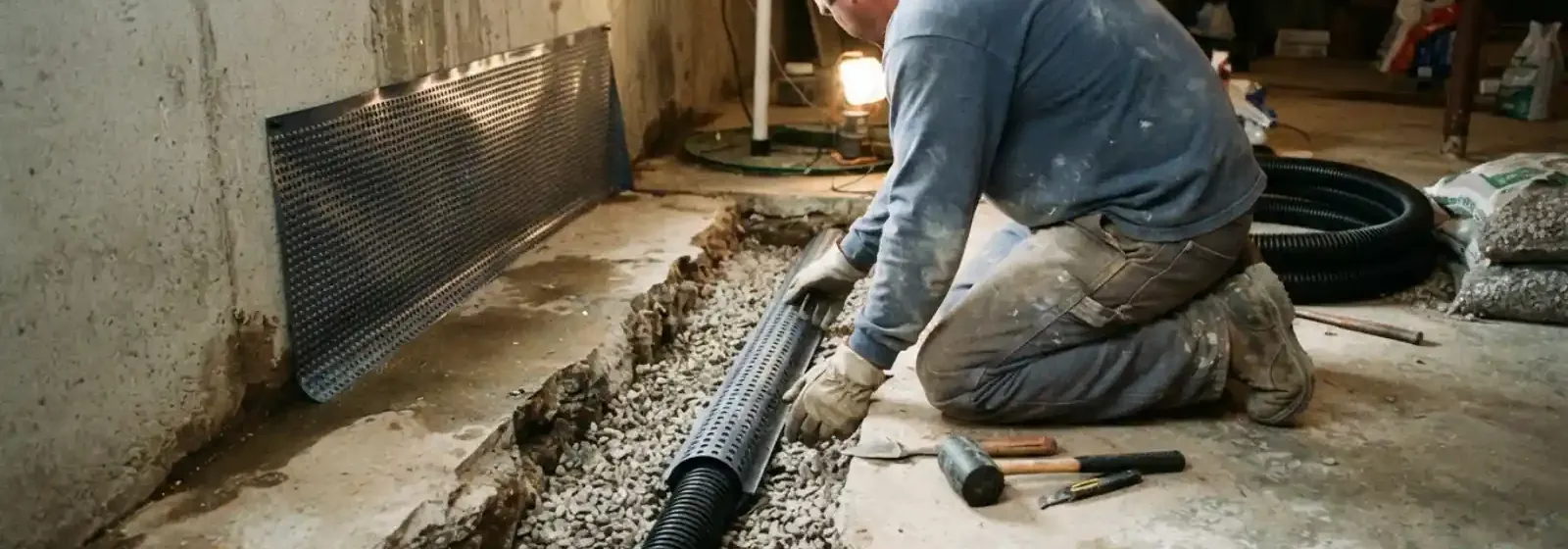
Basement waterproofing in Westfield, NJ is the set of drainage and sealing measures that keep groundwater and surface runoff out of a below-grade space or move it out before it reaches the floor. The cure depends on where the water enters, and in many houses the cheapest fix is outside the foundation, not inside it. We start with the entry point and the yard, then recommend plumbing work only where plumbing is the right tool.
This page is for the planning stage, when you have seen water but the basement is not underwater right now. If a pump has stopped or water is rising, our sump pump emergency page is the one to use, and the dispatch line is open 24/7.
Where Basement Water Actually Comes From
Five entry points account for most wet basements. Knowing which one you have changes the whole plan.
Hydrostatic pressure through the wall or floor
When the soil around a foundation saturates, water pressure builds against the wall and pushes up through the slab. It shows as a dark wet band, efflorescence, or water at the base of the wall.
The cove joint
That is the seam where the floor slab meets the wall. It is a common entry point because the joint is often not sealed, and water follows the path of least resistance.
Window wells
A well that fills with rain or leaf litter and has no drain lets water rise to the window frame and spill inside.
Downspouts and grading
A downspout that empties beside the foundation, or soil that slopes toward the house, puts every roof gallon next to the wall.
Floor drains
A floor drain can back up when the sewer or the house drain is overloaded in a storm. That is a drain problem, not a groundwater problem, and the fix differs.
Why Westfield Basements Get Tested by Storms
Tropical Storm Ida in September 2021 caused catastrophic flooding in Westfield, and a July 2025 storm dropped more than six inches by 8 p.m. after about an hour of heavy rain began the flooding. Rain at that rate overwhelms yards, storm drains, and window wells all at once, so the question for any basement is what was working before the storm and what was not.
Westfield lies along tributaries of the Rahway River. Lenape Park, part of the Rahway River Parkway, spans Westfield and neighboring towns and includes the Rahway River and Nomahegan Brook, while Robinson's Branch flows through the southern part of town toward the reservoir in Clark. Ground near a stream corridor can stay saturated longer after rain, so we ask how your yard behaves in wet weeks before choosing a system.
Many older houses, including those in the preservation plan's districts, were built on older foundations that predate modern drainage details. We do not assume what yours is made of. Instead, we look at the walls, the floor, and the joints, and describe what we see.
Source type: newspaper coverage of the storms and the town's parkway and preservation planning
Water after every storm?
Tell us where it enters and what the yard does in heavy rain. Both details change the answer.
Start Outside: Gutters, Downspouts, and Grading
Before any interior work, we recommend walking the outside of the house during or just after rain. Check that gutters are clear, downspouts discharge well away from the wall, and soil slopes away from the foundation instead of toward it. A downspout extension and a few wheelbarrows of soil can reduce the load on any system you add later.
This is not plumbing, and we say so. Gutter cleaning, regrading, and landscaping belong to other trades, and a waterproofing plan that skips them often disappoints. If the outside is fine and water still enters, then interior drainage and a sump make sense.
Interior, Exterior, and Sealing Options Compared
Each approach solves a different part of the problem. The table shows what each one does and where it falls short.
| Option | What it does | Trade-offs | Good fit |
|---|---|---|---|
| Interior drain tile with a sump | Collects water at the footing or under the slab edge and pumps it out | Needs the pump to work, and the floor edge is opened and re-poured | Persistent seepage at the cove joint or the wall base |
| Exterior excavation and drainage | Digs down to the footing, seals the wall, and installs drains outside | Most disruptive to yards and landscaping, higher labor, and access can be hard | Walls that leak at many points, with room to excavate |
| Surface sealing and coatings | Slows damp migration through masonry | Does not stop pressure, and can peel if water keeps pushing | Minor dampness with no flowing water |
| Window well drains and covers | Moves water away from the opening | Only helps that opening | Wells that fill during storms |
| Sump pump alone | Lowers water that already reaches the pit | Does not stop wall or joint leakage | Houses that already have a pit or a clear low point |
The best plan often combines an outdoor fix with an interior system sized for the worst storm.
What Plumbing Can and Cannot Solve
We can install interior drains, set a sump system, add backup power, and fix floor drain issues. We cannot fix a wall that is bowing or a foundation that is moving, and we do not claim to. A structural crack that is widening, a wall that leans, or a floor that heaves needs a structural opinion before any waterproofing is chosen.
We also cannot promise a bone-dry basement, because heavy storms can exceed any system's capacity. We can promise to explain the limits before the work starts. If water is already on the floor, what to do first is stay out of standing water near outlets, appliances or the panel, then call. Sump discharge and floor drain work fall under the plumbing subcode New Jersey bases on the 2021 National Standard Plumbing Code.
How a Waterproofing Assessment Works
The assessment is where the money is saved. A good plan comes from what we find, not from a package.
- 1
Listen to when the water shows up
After every rain, only in the biggest storms, or in dry weather as well? That sorts groundwater from surface runoff from a pipe leak.
- 2
Walk the outside
We check downspouts, grading, window wells, and any low spots next to the house. Photos and notes go into the recommendation.
- 3
Inspect the interior
We look at the cove joint, wall cracks, the floor, the floor drain, and any sump pit. A moisture meter helps map wet and dry areas.
- 4
Rule out plumbing sources
A meter test and a look at supply and drain pipes confirm the water is not coming from a leak. If it is, leak detection is the right service, not waterproofing.
- 5
Present the options
We explain the exterior steps, the interior systems, and the trade-offs. You see the likely scope before anything is scheduled.
- 6
Check permit rules
Whether a job needs a permit depends on its scope, so ask the Westfield construction office before work begins. We describe the work in plain terms to help with that call.
Humidity and Mold Are Signs, Not the Cause
Mold grows where materials stay damp, so it is a signal that moisture is staying in place, not a separate problem to scrub away. Musty smells, white mineral crusts, and peeling paint tell you where water has been.
A dehumidifier can lower the humidity in a basement and help dry stored items, but it treats the symptom. Keep it draining to a floor drain or a pump, and keep stored items off the floor. If you see widespread growth, call a qualified remediation firm, as that work is outside plumbing.
Where a Sump System Fits In
A sump pit is the low point where an interior drain delivers water, and the pump moves it out. A system is only as good as its pump, its check valve, and its discharge, which is why we treat a sump as a plumbing system and not an accessory. Our sump pump service covers repairs, backups, and replacements.
Neighbors in Scotch Plains saw flooded basements in Ida as well, and the same planning applies there. If you are weighing a system now, call our dispatch line and describe your entry point.
What Drives the Cost of Waterproofing
Waterproofing runs from a downspout extension to a full exterior dig, so a single figure would mislead. The price comes after the assessment, and you see it before anything starts.
- Where the water entersA cove joint is a different job than a window well or a wall seeping at many points.
- Interior or exterior approachExterior work means digging and restoring the yard. Interior work means cutting the floor edge and re-pouring.
- Length of the drain runMore linear feet of drain tile, plus the pump and discharge, mean more labor.
- Pump, backup, and dischargeThe pump size, battery backup, and discharge route all add to the system.
- Access and finishesFinished basements, tight corners, and difficult yard access raise the labor needed.
Policies differ. Many homeowners policies treat sudden accidental discharge differently from wear, corrosion, or slow seepage, and groundwater or sewer backup coverage is often a separate add-on, so read yours before planning on a claim. Waterproofing as an improvement is typically not covered. To talk through your basement, call (908) 357-1542.
Basement Waterproofing Questions We Hear
Water that appears only after rain points to groundwater or surface runoff. Water that appears in dry weather, or a meter that moves with every tap off, points to a pipe.
Yes. Roof water and sloping soil can put more water next to the wall than the water table does. Fix those first, and the interior system has less to handle.
It collects and removes water that gets to the floor edge and the footing. It does not stop water from reaching the wall, and it relies on a working pump. We explain the limits before the work starts.
Some are, and many are not. A crack that is widening, stepping along mortar joints, or paired with a leaning wall needs a structural opinion. Seepage through a hairline crack is a different problem.
Stop the moisture source, run a dehumidifier, and keep stored items off the floor. Large areas of growth call for a remediation firm.
Waterproofing is a planned job, but urgent cases like a failed pump or rising water are handled 24/7. The sump pump page covers that, and the dispatch line is always open.
Sometimes. Backups can come from a house drain clog, which can be cleared, or a larger sewer problem. Ask Westfield Public Works which section of the line is the town's.