

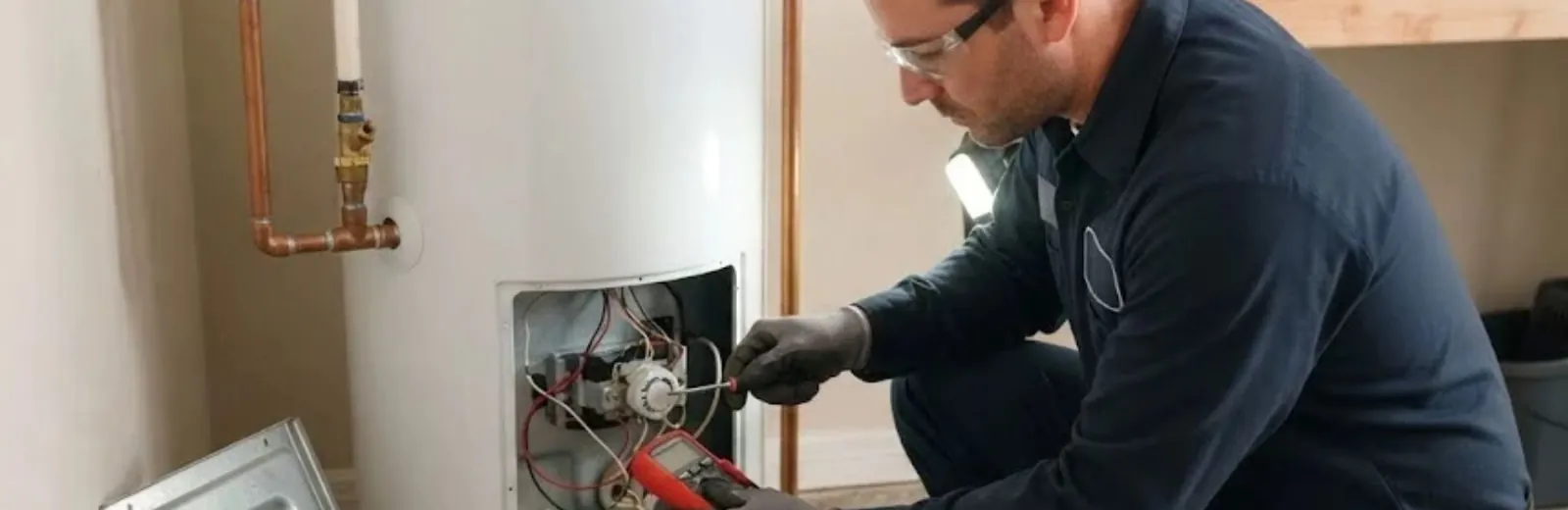
Water heater dip tube replacement in Westfield, NJ means pulling a worn plastic tube out of the cold-water inlet on top of the tank and fitting a new one. The dip tube is a long, thin pipe that carries incoming cold water to the bottom of the tank, where the burner or lower element heats it. When it breaks, cold water pours in near the top and mixes with the hot.
The result is lukewarm showers and a hot supply that seems to run out in minutes even though the tank is full. The fix is small in parts and needs care in practice, so this guide explains the symptoms, the job itself, and the point where a new tank is the better call.
What a Failed Dip Tube Looks Like
Lukewarm water at every tap
Cold inlet water is mixing into the hot outlet at the top of the tank before it has been heated.
Hot water runs out in a few minutes
The tank thermostat reads fine, but the usable hot supply is a fraction of what the tank should deliver.
White or tan plastic flecks at faucets
Crumbs collect in aerators and showerheads when a degraded tube sheds pieces.
Heater runs often but never gets hot
The thermostat keeps calling for heat because the water near the sensor is repeatedly cooled by incoming flow.
No leaks, no noise, no error
That quiet pattern is a clue. Burner and element faults usually give other signs.
Dip Tube or Something Else? A Quick Sort
Several faults make water lukewarm. This table shows how to tell them apart before anyone opens the tank.
| Symptom | Likely cause | How it is confirmed |
|---|---|---|
| Short supply, plastic bits in aerators | Failed dip tube | Inspect the tube once the inlet fitting is removed |
| No hot water on a gas unit, pilot out | Pilot, thermocouple or gas valve | Plumber checks ignition and gas control |
| Electric unit warm but never hot | Failed lower element or thermostat | Meter testing of elements and thermostats |
| Hot at tank, lukewarm at a far tap | Long pipe run, no recirculation | Compare temperature at the heater and at the tap |
| Hot water that stays hot then turns cold or hot at random | Mixing valve or crossover leak | Check shower valve cartridge and nearby cross-connections |
| Rumbling, rusty water, tank old | Sediment or end of tank life | Flush results, tank age and condition |
Test before you replace parts. Dip tubes are cheap, but the work is not worth doing on the wrong problem.
Hot water ends too soon?
A failed dip tube is one possible cause. A plumber can test it before anything is replaced.
How a Dip Tube Is Replaced
The sequence below is what a plumber does. It is described here so you know what the visit includes.
- 1
Isolate fuel and water
The gas or electricity is turned off, and the cold supply to the heater is closed.
- 2
Relieve pressure and lower the level
A hot tap is opened and some water is drained so the cold inlet fitting can be opened without a surge.
- 3
Disconnect the cold inlet
The union or nipple on the cold side is unscrewed. On many tanks the tube is built into a heat-trap nipple, so the whole piece comes out together.
- 4
Pull the old tube and check the threads
A brittle tube may split on the way out. The tank threads are cleaned and checked for corrosion, which is the usual reason a repair is abandoned.
- 5
Fit the new tube and reconnect
The replacement is sized to stop a few inches above the tank bottom. Fittings are sealed, the tank refilled and vented, and the fuel or power restored.
- 6
Test the result
Hot water is run long enough to see whether the supply holds, and the connections are checked for leaks.
Replace the Tube or Replace the Tank?
A new dip tube makes sense when
- The tank is otherwise dry, with no rust at the seams or base
- The heater is mid-life and was working well until recently
- The inlet threads are sound and the fitting comes out cleanly
- Nothing else is failing at the same time
A new tank is smarter when
- The tank is old and already showing leaks, rust or heavy sediment
- The inlet threads are corroded and will not seal
- The anode rod is gone and the lining is likely worn through
- You would be repairing it a second time in a short span
Licensing in New Jersey and Westfield's Older Tanks
According to the State Board of Examiners of Master Plumbers FAQ at the Division of Consumer Affairs, plumbing work may only be performed by a master plumber, an authorized plumbing contractor, or their employees. In practice, you can ask any plumber for a license number and confirm it with the State Board before work starts. We do not print a license number on this site, so ask us directly on the call, and ask every other company the same.
With the median home in the 07090 ZIP built around 1953 and about 37 percent built in 1939 or earlier, many Westfield basements hold tanks that replaced earlier ones in the same spot. Ask the plumber to check the tank age and the fittings before deciding, because corroded threads or a rusting base turn a small repair into a replacement.
Source type: State Board of Examiners of Master Plumbers FAQ
When to Call Instead of Trying This Yourself
A homeowner can safely check the basics: turn the thermostat to the setting on the label, look for plastic bits in the aerators, and note how long the hot water lasts. Opening the cold inlet, draining the tank and working near gas or electricity is plumbing work for a licensed professional. If the heater is leaking or the pilot will not stay lit, call our 24/7 dispatch line.
Our water heater repair visits start with confirming the cause so nothing is replaced on a guess. When the tank itself is the problem, we move to water heater replacement, and the same dispatch line serves neighbors in Scotch Plains, as outlined on the Scotch Plains page.
Dip Tube Questions
It depends on the tube material, water chemistry and heater age. Many tubes outlast the tank, but a degraded one can fail well before the tank does.
Check the warranty terms for the tank and for labor separately. Some cover the part only. Ask the plumber to put in writing what is and is not included.
They are mainly a nuisance that clogs aerators and showerheads. Clean the aerators, and have the cause fixed so they stop appearing.
The house itself does not matter, but older homes more often have older tanks and corroded inlet fittings. Ask for the tank age and thread condition to be checked.
Ask for the license number and confirm it with the State Board of Examiners of Master Plumbers. A legitimate company will give it without hesitation.
Usually the work takes one visit, but draining, refilling and testing take time, so plan for no hot water for part of the day.