

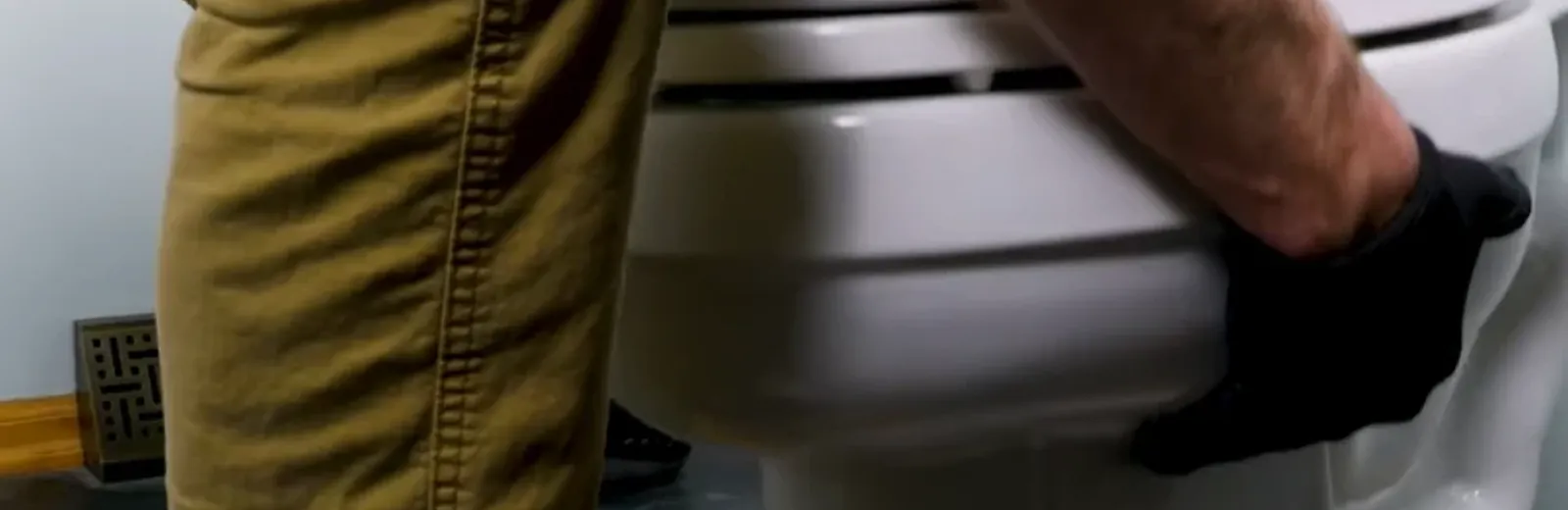
Installing a new toilet in Westfield, NJ means shutting off the water, removing the old unit, checking the flange and floor, setting the new bowl on a fresh wax ring, bolting it down evenly, and connecting a new supply line. The flange is the ring on the floor that connects the toilet to the drain pipe, and it decides whether the job is simple or not.
This guide covers the measurements to take before you buy, what each stage of the job involves, and the conditions that make it a job for a licensed plumber. A toilet is heavy and fragile, so plan to have a second person for the lift.
Measure the Rough-In Before You Shop
Rough-in is the distance from the finished wall behind the tank to the center of the floor drain or closet bolts. Measure to the bolts, not the base of the old toilet. The most common distance is 12 inches, but 10 and 14 inch layouts exist, and a toilet built for one will not sit right on another.
Also note the bowl shape, round or elongated, and the clearance beside and in front of the toilet. Write down whether the tank bolts to the bowl or the toilet is one piece, because that affects both weight and the parts you will handle.
Check the shutoff valve behind the toilet while you are there. If the handle will not turn smoothly, you cannot isolate the water, and that is worth fixing before the day you need it in a hurry.
The Installation Sequence
Each stage has one thing that commonly goes wrong.
- 1
Shut off and drain
Close the supply valve behind the toilet, flush, and sponge out the remaining water in the tank and bowl so it is lighter and cleaner to move.
- 2
Disconnect and lift
Unscrew the supply line, remove the nuts on the closet bolts, rock the toilet gently to break the old seal, then lift straight up and set it on a towel.
- 3
Inspect the flange and floor
Scrape off the old wax. Look for a cracked or corroded flange, a flange that sits well below the floor surface, and soft or dark floor around it.
- 4
Seat the new bowl on a fresh wax ring
Place the ring on the flange or the horn of the bowl, lower the bowl straight down over the bolts, and press down evenly without twisting.
- 5
Tighten the bolts in turns
Snug each nut a little at a time, alternating sides, until the bowl is level and firm. Overtightening cracks the porcelain, so stop when the toilet no longer rocks.
- 6
Mount the tank and connect the supply
Attach the tank with its gasket and bolts, connect a new supply line, open the valve slowly and check every joint for drips.
Toilet rocks or leaks at the base?
Stop flushing it, shut the valve behind it, and have the flange and floor checked.
What You Find Under the Old Toilet
| What you see | What it means | Who handles it |
|---|---|---|
| Clean flange level with the floor | Standard swap | Homeowner may proceed with care |
| Flange cracked, bent or rusted | Seal will not hold | Licensed plumber repairs or replaces the flange |
| Flange sits below the floor surface | New flooring was added over the old | A spacer or flange repair is needed. Ask a plumber |
| Soft, dark or spongy floor around the base | Long-term leak and rotted subfloor | Plumber finds the leak, a carpenter repairs the floor |
| Stains on the ceiling below | Water has been passing through the floor | Stop and call before setting anything new |
| Old iron drain stub with heavy corrosion | Drain connection is failing | Plumber only |
A toilet set on a bad flange or soft floor will leak again, no matter how new it is.
Pre-War Bathrooms and the State Plumbing Subcode
About 37 percent of homes in the 07090 ZIP were built in 1939 or earlier. Bathrooms in those houses often have layered flooring, an old cast iron drain stub that may have corroded, and a shutoff valve that has not moved in decades. Expect the flange to need a closer look than in a newer house, and test the shutoff gently before you rely on it.
New Jersey's plumbing subcode (N.J.A.C. 5:23-3.15) adopts the 2021 edition of the National Standard Plumbing Code Illustrated, so a finished job is expected to meet that standard. Permit rules vary by job, so ask the Westfield construction office before work starts, particularly if you are moving the toilet rather than swapping it in place.
Source type: state administrative code
When the Job Belongs to a Licensed Plumber
New Jersey allows plumbing work to be performed only by a master plumber, an authorized plumbing contractor, or their employees. A like-for-like swap is the kind of task many homeowners handle, but a failed flange, a moved drain, or any change to the waste or vent piping is not. If water has already stained the ceiling below or the floor is soft, stop and call our dispatch line before setting a new bowl.
Our toilet repair and installation visits include checking the flange and the floor first, which saves buying a toilet you cannot set. For a drain that keeps backing up after the new toilet is in, drain cleaning may be the real fix, and we cover Scotch Plains as well, as described on the Scotch Plains page.
New Toilet Questions
No. A wax ring compresses once and will not seal reliably a second time. Use a new one every time the toilet comes up.
Snug, then stop. Tighten each nut a little at a time until the bowl no longer rocks. Cranking down is the usual way porcelain cracks.
The floor may be uneven, or the flange may sit too low. Small gaps can be shimmed, but a flange problem needs repair.
Do not force or cut it. Older iron drain connections can crumble when disturbed, so have a licensed plumber assess it before you install.
Permit rules vary by job. Ask the Westfield construction office whether a like-for-like replacement needs one, and always ask if you are changing pipes.
Replace the supply line every time. If the shutoff valve is stiff, drips or is corroded, have a plumber replace it rather than forcing it.